Your First $100 Online: What Pays Fast vs. What Takes Months
Your First $100 Online: What Pays Fast vs. What Takes Months
Your first $100 online can arrive in a few days — or take a few months. Fast work like user testing, selling things you own, and small freelance tasks can pay this week. Slow work like a blog or a digital product can pay more later, but usually earns nothing for the first month or two. Neither path is wrong. The mistake is picking a slow path when you need cash this week — or a fast one and expecting it to become a full income.
What “fast” really means
Before you compare options, get clear on two things people mix up: earning and getting paid. Some work pays the same day you do it. Other work earns money now but pays out a week or two later, after a platform holds the funds or a client approves it. And some work takes weeks of building before the first dollar appears. When you read a pay claim, always ask: how long until the money is in my account?
Pays in days: the quickest routes to $100
These are the fastest ways to see real money.
Sell things you already own
Listing unused items on a local marketplace or resale app is the fastest honest $100 most beginners make. A spare phone, shoes you never wear, old game consoles, a bike gathering dust — most homes hold a few hundred dollars of sellable stuff. Take clear photos, write an honest description, and price slightly below similar listings to move things fast. That first win matters: it proves earning online is real.
User testing
User-testing sites pay you to try a website or app and talk through what you think, out loud, while you use it. A typical test takes 10 to 20 minutes and pays around $10. You will not qualify for every test, but a handful in a week can add up to $30 to $50. All you need is a computer, a microphone, and a quiet room.
Small freelance tasks
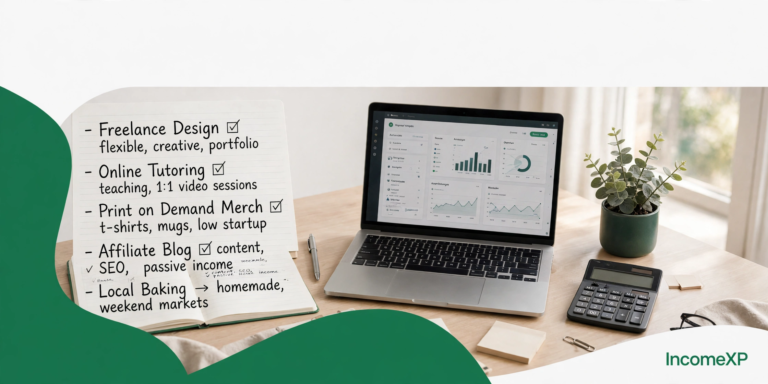
If you can write a short paragraph, clean up a spreadsheet, or make a simple social media graphic, someone will pay for it. Short-task marketplaces let you sell small jobs starting at $5 to $25 each. The first few jobs are the hardest to land because you have no reviews yet, so price your first jobs low and deliver fast. Four or five small jobs can add up to your first $100 in a week or two — and each one becomes a review that makes the next easier to win.
Pays in weeks: steady work that builds
These take a little longer to start, but they pay better and can grow into regular income. Seasonal gigs belong here too: in November, retailers and delivery services hire extra holiday help, and many roles pay weekly.
Freelance services
Offering a service — writing, virtual assistance, bookkeeping, social media help — usually takes one to three weeks to land a first client, then pays per project or hour. Even $20 an hour adds up fast: five hours is your first $100. Pick one service, write a short offer that says exactly what the client gets, and tell people it exists. The slow part is finding the first client, not doing the work.
Online tutoring
If you can explain a school subject, a language, or a practical skill, tutoring pays per session, often $15 to $30 an hour. Signing up and getting approved on a tutoring platform takes a few days, and building a small roster of students takes a few weeks. Once you have two or three regular students, $100 a week is a realistic, repeatable number.
Takes months: slow starts with bigger upside
Worth doing, but not if you need $100 this week.
Content: blogging, video, or a newsletter
Writing posts or making videos can eventually earn through ads, sponsorships, or affiliate recommendations — but only after you have an audience, and that takes months. Expect little or no income for the first two or three months. Content is a good second project, not a first paycheck.
Digital products
Selling a template, a guide, or a printable has great margins. But you have to make the product, set up a place to sell it, and find buyers. Most beginners spend two to four weeks before their first sale — a strong long-term lane, just not a fast one.
How to pick: match the path to your timeline
Ask yourself: when do I need the money?
- This week: sell something you own, do user tests, take small freelance tasks.
- This month: start a freelance service or tutoring, and pick up seasonal gigs.
- This year: build content or a digital product alongside the faster work.
The smartest beginners do both at once: use a fast method to earn your first $100 now, and put an hour or two a week into a slower method that can grow. That way you get quick cash now and something bigger later.
What to avoid on the way to your first $100
- Anything that asks you to pay to start earning. Legitimate work does not charge an enrollment fee, a starter kit, or a training fee before you can work.
- “Guaranteed” income claims. No honest method guarantees a dollar amount or a timeline. If someone promises $500 a week with no skills and no effort, walk away.
A simple 7-day plan to your first $100
Day 1: Pick one fast method from this post and set a $100 target with a deadline.
Day 2: Set up your account or list your first three items for sale.
Day 3–4: Do the work — take tests, send pitches, or answer buyers.
Day 5: Follow up on anything pending: unanswered messages, unpaid invoices, listed items with no views.
Day 6–7: Count what you have earned, close the gap with one more push, and bank the $100.
FAQ
How long does it really take to make your first $100 online?
It depends on the method. Selling items or user tests can do it in a few days. Freelance services usually take one to three weeks. Content and digital products often take one to three months before the first sale.
What is the easiest way to make $100 online as a beginner?
Selling things you already own is usually the easiest, because there is no skill to learn and no client to find. After that, user testing and small freelance tasks are the simplest ways to earn.
Do I need any money to start?
No. Every fast method in this post costs nothing to start: selling your own items, user testing, small freelance tasks, and tutoring sign-ups are all free.
Is $100 a week realistic for a beginner?
Yes, once you have a working method and a little momentum. The first $100 is the slowest because you are learning everything at once. The second usually comes faster, because you already know what works.