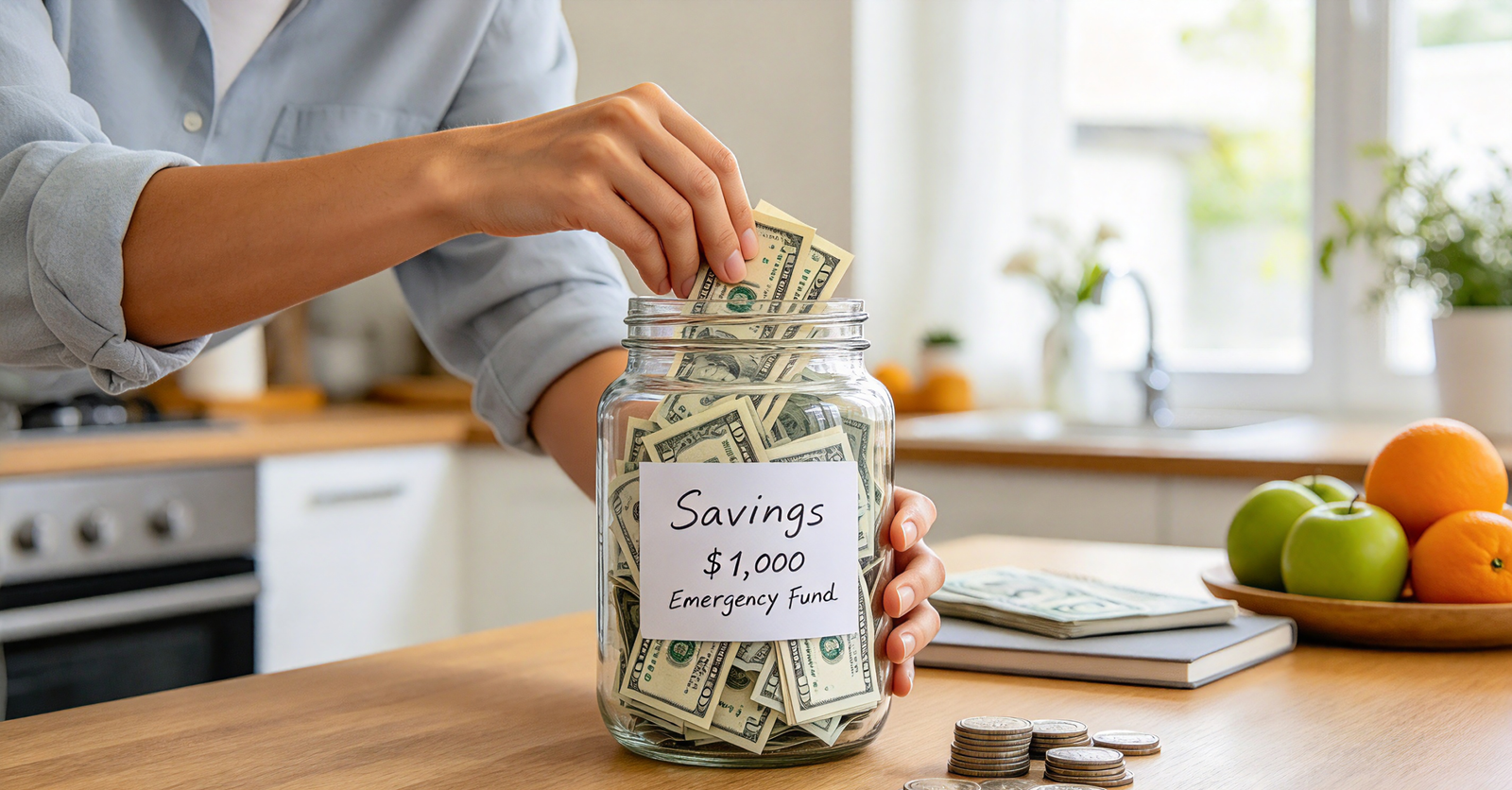
Build a $1,000 Emergency Fund on a Small Income
If you want to build a $1,000 emergency fund but your income barely covers the bills, the goal can feel out of reach. A thousand dollars sounds like a lot when every pay check is already spoken for. But an emergency fund is not about being rich. It is about having a small cushion so that one flat tire, one broken phone, or one surprise bill does not turn into debt.
You do not need to save $1,000 all at once or have a perfect budget first. You need a small, regular amount, a separate place to keep it, and a plan for weeks when saving feels impossible.
Why $1,000 Is the Right First Target
Experts often recommend saving three to six months of expenses, and that advice is sound — for later. As a first goal, it takes so long to reach that most people give up first.
One thousand dollars is different. It covers the most common emergencies: a car repair, a vet visit, a plumber, or groceries when hours get cut. It is also small enough to reach in a few months, even on a tight income — so you get the confidence of finishing a goal instead of chasing one that never ends. Once you reach $1,000, you can decide whether to keep going toward a bigger cushion.
Step 1: Find Your First $20 a Week
Forget the idea that you need to save hundreds of dollars a month. Start with an amount so small you will barely notice it, and build from there.
Look at one week of spending and find $20 to move. Common places it hides:
1. One takeout meal swapped for cooking at home.
2. A subscription you forgot you were paying for.
3. Snacks or drinks bought on impulse during the week.
4. A streaming service you rarely open.
If $20 a week feels too much, start with $10. At $20 a week, you reach $1,000 in 50 weeks; at $10,it takes about two years — slower, but still real progress, and you can speed up later as your income grows. The habit matters more than the amount.
Set the transfer for payday, not month-end. Money left sitting in your account tends to get spent; money moved on payday is gone before you can miss it.
Step 2: Keep It Separate, but Reachable
An emergency fund only works if you can leave it alone. In your everyday checking account, it quietly disappears into groceries and gas. Locked away for days, it will not help when the car breaks down on a Tuesday.
The middle ground is a separate savings account at your bank, or one you open online. You want two things from it:
• It is not your spending account. You do not see the balance every time you check your checking balance, and you do not have a debit card linked to it.
• You can reach it within a day or two. Real emergencies do not wait a week.
Do not worry about the highest interest rate. At this stage, the point of the fund is safety, not growth, and you can always move the money later.
Step 3: How to Build a $1,000 Emergency Fund on a Simple Timeline
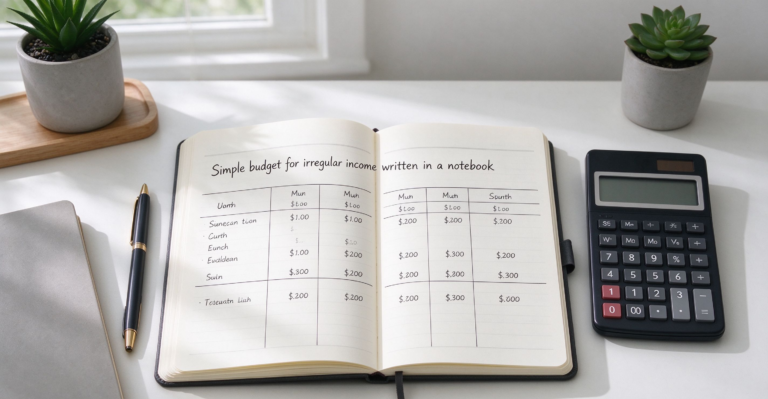
You do not need a spreadsheet with twenty categories — just a rough timeline:
Weeks 1–4: Save $20 a week and get to $80. This is the hardest part, because nothing feels different yet. Keep going.
Month 3: You should be near $250. That already covers a minor emergency, which is a real milestone.
Month 6: At $20 a week, you are close to $500 — halfway there.
Month 12: You cross $1,000, or sooner if you add extra money along the way.
Track your progress somewhere visible — a note on the fridge or a line in your phone. Watching the number climb keeps you going through the boring middle months.
A Faster Route, Without Burning Out
Extra income helps if it goes straight to the fund. Move money from a one-off sale, an extra shift, or a small side job into savings before it blends into your spending — even $50 cuts weeks off your timeline. The same goes for a tax refund or rebate: putting half into the fund and keeping half is a fair split that still moves you forward fast.
Step 4: Decide in Advance What Counts as an Emergency
This is the step most people skip, and it is why many funds get drained on things that were notemergencies. Before you need the money, write down your own rules:
• Yes, use it: car repair you need to get to work, a medical or dental bill, a broken appliance you can not live without, an urgent home repair like a leaking pipe.
• No, do not use it: a sale, a holiday, a new phone when the old one still works, a gift, or anight out.
Having the rules written down removes the argument with yourself at the moment of temptation: you check the list instead of debating it in your head.
What to Do When an Emergency Actually Happens
Sooner or later, you will need the money. That is not failure — it is the fund doing what it was builtto do.
Use only what the emergency costs. Pay the bill, write down what you spent, and restart your weekly saving — even at $10 a week for a while. Rebuilding a fund you have already built once is faster the second time, because you already know you can do it.
One thing to avoid: replacing the emergency with debt when you have cash available. Paying a $300 repair from savings and rebuilding slowly almost always beats putting it on a credit card and paying interest for months.
What to Avoid
• Waiting for a “good month” to start. There is rarely a perfect month. A small start this week beats a big plan next year.
• Saving in cash at home. It is too easy to spend, too easy to lose, and it earns nothing. A separate account protects you from yourself.
• Raiding the fund for non-emergencies. Every “just this once” withdrawal resets your progress and teaches you the fund is optional. It is not.
• Feeling guilty about a slow pace. The pace is not the point; the habit is.
Your First Step Today
Open a separate savings account, or pick one you already have that you do not spend from. Then set up a weekly transfer of $10 or $20, starting on your next payday. That is the whole first step —no budget overhaul, just one automatic move of money.
Then write your emergency rules down and keep them with your money notes. In a year, that small weekly habit can be $1,000 standing between you and the next surprise bill.
IncomeXP publishes practical, hype-free guides to earning more — no promises, just information you can use.