Local Service Side Hustles That Need No Audience
Most online side hustles quietly require an audience: followers, subscribers, traffic. Local service side hustles skip that entirely. You sell your time and effort to people near you — neighbors, local shops, busy parents — and your “marketing” is a conversation, a flyer, or one good job that leads to a referral. If starting a YouTube channel or building an email list sounds exhausting, this lane might fit you better.
The other advantage is speed. An online hustle can take months to earn its first dollar. A local service can pay you this weekend. Below are ideas grouped by how much skill they need, how to land your first clients, what a realistic first month looks like, and the mistakes that trip beginners up.
Why local services work when you have no audience
Online, trust is built through content — posts, reviews, and a track record people can scroll through. Locally, trust is built through proximity. Someone will hire the neighbor their coworker recommended long before they hire a stranger with ten thousand followers. You are not competing with the whole internet; you are competing with whoever else in your neighborhood is offering the same help.
Local services also have natural pricing power. A homeowner who needs help now will happily pay a fair price to someone who can show up Saturday morning. And every finished job quietly advertises you: the customer tells a friend, and the friend becomes client number two.
Services you can start with zero special skills
These need nothing you don’t already have — no training, no portfolio, no certification.
• House cleaning. Deep cleans and move-out cleans pay well because people dread doing them. A typical deep clean of a small home takes 3–4 hours and often pays $100–$200 depending on your area. Start with your own home to learn the routine, bring your own basic supplies, and off er a first clean at a fair introductory rate.
• Yard work and seasonal cleanup. Raking, leaf removal, weeding, and hauling yard waste are in constant demand and almost nobody likes doing them. Autumn leaf season alone can fill your weekends — charge per yard or per hour, and bring your own rake and bags so the client needs nothing.
• Errands and grocery help. Elderly neighbors, new parents, and busy professionals will pay for someone reliable to run errands, pick up groceries, or wait for a delivery. This one costs you nothing to start and can turn into a regular weekly arrangement.
• Pet sitting and dog walking. If you like animals, this is one of the friendliest ways to earn. Start with people you know, get comfortable with their routines, and ask for a short written testimonial you can show the next prospect.
For any of these, expect roughly $15–$30 per hour as a beginner in most areas, or flat rates of $50–$150 per job depending on the size. Cities usually pay toward the higher end; small towns toward the lower end.
Services that need one basic skill
These take a little practice, but each one can be learned in a few evenings from free videos and a couple of trial runs at home.
• Furniture assembly and wall mounting. People buy flat-pack furniture and TVs, then stall for weeks because they don’t own a drill. If you have basic tools and can follow instructions carefully, assembling furniture or mounting a TV takes 30–60 minutes and typically pays $50–$100 per visit.
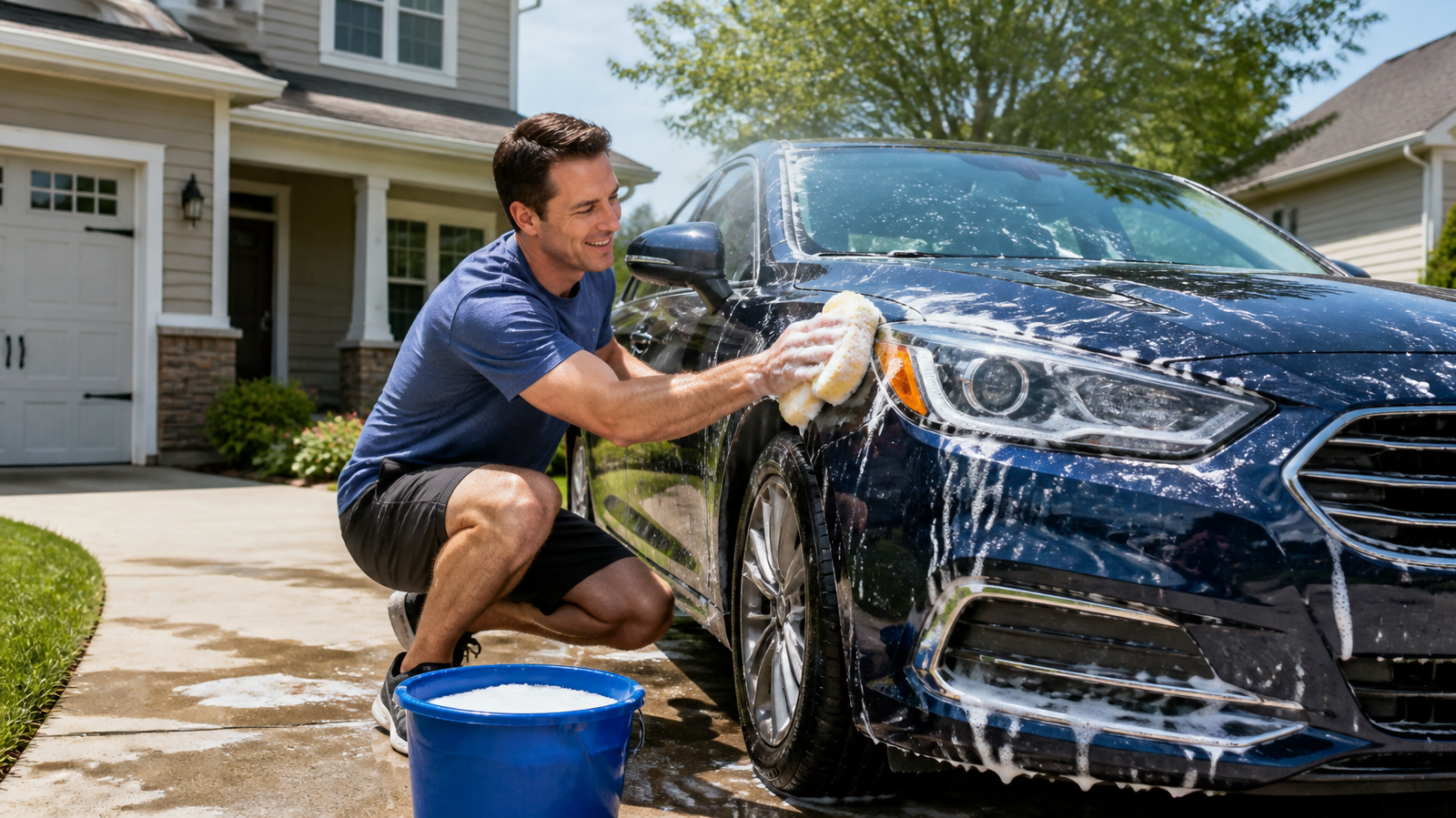
• Car detailing. Not a full mechanic job — just thorough interior cleaning: vacuuming, wiping surfaces, cleaning windows, and making a car smell new. A basic vacuum, microfiber cloths, and all-purpose cleaner cost under $50 to start, and a full interior detail can pay $75–$150.
• Lawn mowing (weekly clients). The magic word here is “weekly.” One-off mows are fine, but a route of regular lawns is recurring income. If you own a mower, knock on doors in your own neighborhood first — a $35–$50 weekly mow for ten homes adds up fast.
• In-person tutoring or homework help. You don’t need a teaching degree to help a middle schooler with math or reading. Parents pay for patience and reliability, and word spreads quickly through school parent groups.
How to get your first three clients this week
You do not need ads, a website, or social media accounts. Do these four things in order:
1. Tell ten people directly. Text or talk to ten people — neighbors, coworkers, family, friends —and say exactly what you’re offering and when you’re free. Most beginners skip this and then wonder why nobody calls. The majority of first clients come from people you already know.
2. Post in one local online spot. Your town’s community Facebook group or Nextdoor is enough. One short post: what you do, your area, and a way to reach you. Keep it friendly andspecific — “Saturday yard cleanups in Riverside, rakes and bags included” beats “I do various services.”
3. Put up simple flyers. Grocery store bulletin boards, laundromats, and community centers still work for local services. Use big text, name the service, name the price range, and include a phone number with tear-off tabs if you can.
4. Ask every happy customer for one referral. When someone likes your work, ask: “Do you know anyone else who could use this?” That single question is how one job becomes five.
Realistic first-month numbers
Let’s be honest about what to expect. In your first month, a part-time effort of 8–10 hours a week at beginner rates usually earns somewhere between $300 and $800. Some people do better if they land two or three regular clients quickly; some do less if they only pick up scattered one-off jobs.
A realistic trajectory: weekend one earns your first $100 from a deep clean. Weekend two adds a regular lawn client at $40 a week. By weekend four, you might have two regulars and a few one-offs — roughly $500–$600 for the month. It grows as referrals compound, not as your follower count does.
Mistakes to avoid
• Underpricing out of fear. Charging $10 an hour doesn’t win more clients; it just burns you out. Price near what others in your area charge, and let quality do the convincing.
• Buying gear before you have customers. Borrow or rent equipment for the first jobs. Buy your own only after paid work has covered the cost.
• Saying yes to everything. A client an hour away or a job you can’t actually do will cost you more than it pays. Stay close to home and inside your abilities.
• Doing jobs with no clear price. Agree on the price before you start — in writing, even a text message. Awkward five-minute conversations at the start prevent painful arguments at the end.
You don’t need an audience, a personal brand, or a single post on social media to start earning this weekend. Pick one service, tell ten people, and let the first good job do your marketing for you.
IncomeXP publishes practical, hype-free guides to earning more — no promises, just information you can use.