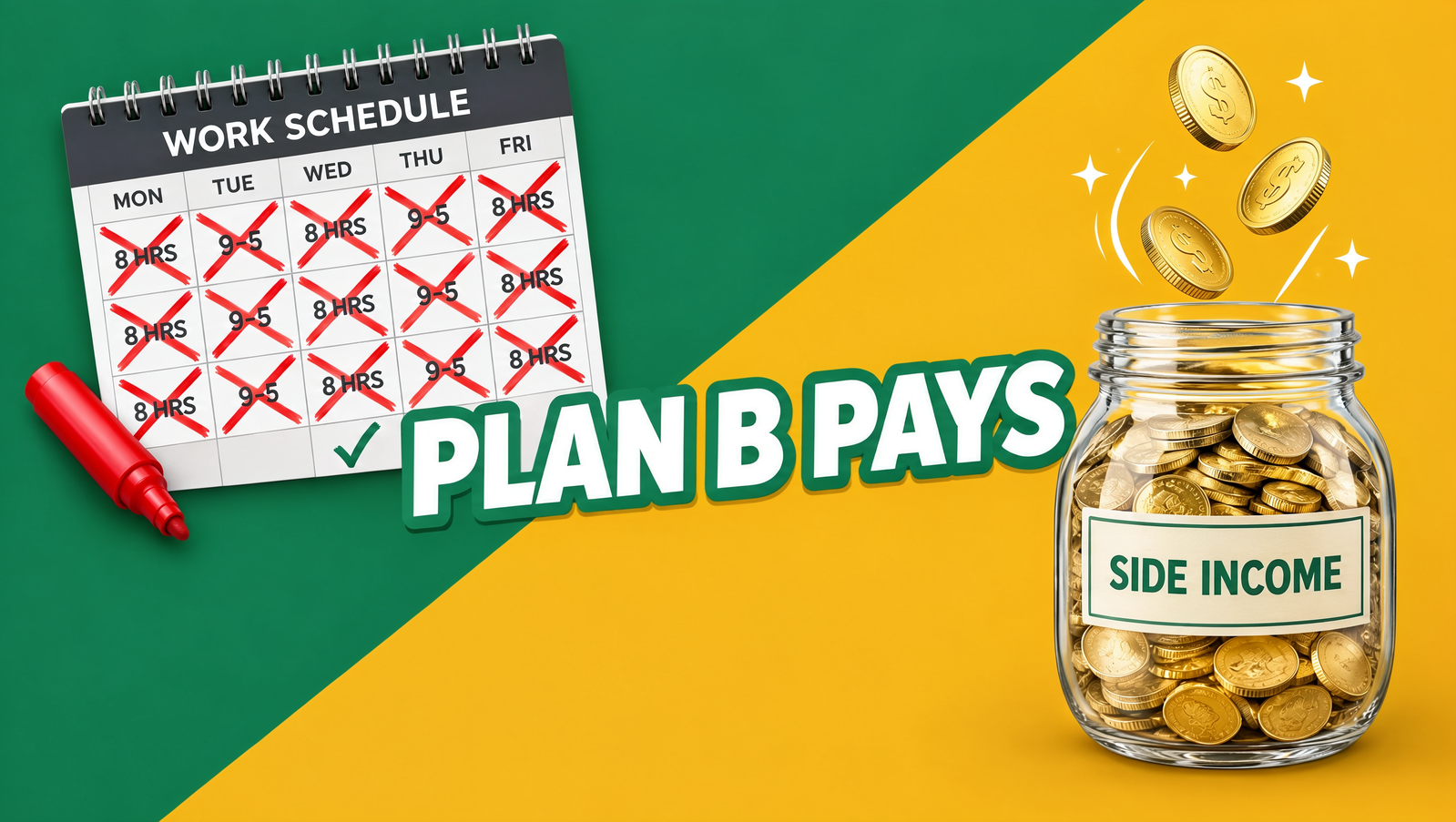
Backup income is a second stream of money you build while your main job still pays the bills — so that if your hours get cut or a contract ends, you are not starting from zero. Build it now, while you still have a steady paycheck, not after the cut has happened.
Why It Matters Before the Cut Happens
Most people wait for a bad month to think about extra income. That is the worst time to start: you are stressed, you need money fast, and every option that pays quickly also pays badly. A backup income stream built calmly, a little at a time, is worth far more than a panicked scramble later.
If your hours were cut by 20% tomorrow, how much would you be short each month? For many people that is $200 to $400. A backup stream earning even $150 a month does not replace the lost pay — but it turns a crisis into a tight month, and it can grow from there if you keep at it.
Everything takes longer than you expect. Your first clients, your first sales, your first reviews — none of that happens in a week. Starting now buys you the months a new income stream needs to find its feet.
How Much Backup Income Do You Actually Need?
You do not need to replace your whole paycheck. A good first target is $200 to $300 a month — enough to cover groceries, a utility bill, or a car payment if your hours drop.
Work it out in three steps:
- Find your gap. Look at your last two pay stubs. If your hours dropped by a quarter, how much would you lose? That number is your target.
- Pick a start date for the stream, not a finish date. Give yourself 90 days to reach your first $100 month. That is realistic for most side streams.
- Keep the goal small and visible. Write the number on a sticky note or in your phone. A $200 target you can see beats a $1,000 dream you never measure.
Five Backup Income Streams You Can Start This Month
You do not need a business plan. You need one stream that fits your skills and your schedule, started this week.
1. Sell a skill by the hour
If you can write, design, fix things, tutor, translate, or do basic bookkeeping, you can sell that skill by the hour. One or two small clients is enough to start. A realistic first month is $100 to $300 for a few hours a week — the fastest of the five options, because you are selling time you already have.
2. Make one small digital product
A simple checklist, a template, a short guide, or a set of printable planners can sell for $5 to $15 each. The first month is usually slow — maybe $20 to $50 — because nobody knows the product exists yet. But once it is made, it can keep selling with very little extra work, which is exactly what a backup stream should do.
3. Rent out something you already own
A spare room, a parking space, tools, a camera, or a car you rarely use can all earn money without extra work. Even $50 to $100 a month from one rented item counts — and it starts faster than any skill-based stream.
4. Take on weekend local work
Dog walking, yard work, cleaning, moving help, or event setup all pay by the job and need no audience or online profile. A single weekend job can pay $40 to $100. It trades your time directly, so treat it as a bridge — money now while a slower stream grows.
5. Start a slow content stream
A blog, a YouTube channel, or a newsletter about something you know well will not pay in month one. But six months from now, it can be the stream that keeps growing while you sleep. Start it now, in 30 minutes a day.
Your First Two Weeks: A Simple Start Plan
Week one: Pick one stream from the list above — the one that feels easiest, not the one that sounds most impressive. Tell three people you are offering it, set up whatever account or listing it needs, and do the first piece of real work: one listing, one sample, one offer sent.
Week two: Do the work again, slightly better. Freelance work: send five more messages. A digital product: finish it and list it. Renting: photograph the item and post it. Track every dollar that comes in, even $5.
After two weeks you will have something real: a live listing, a first client conversation, or a first sale. Backup income is not built in a weekend — it is built in small, repeated weeks.
What to Avoid
- Don’t quit your job to build it. Your main job pays the bills while the stream grows. Quitting first turns a safety net into a gamble.
- Don’t spend money before you earn any. A website, a course, or new equipment can wait until the first dollars come in.
- Don’t start three streams at once. One stream, done steadily for three months, beats three streams started and abandoned in three weeks.
- Don’t count on a single client. One client who pays well is great — until they go quiet. Keep more than one source of money, even if each one is small.
- Don’t ignore the tax side. Extra income is still income, so set aside 15 to 20% of what you earn in a separate spot. This is general information, not tax advice — check your local rules if you are unsure.
FAQ
How much backup income should I aim for?
Start with $200 to $300 a month — enough to cover the gap if your hours were cut by about a quarter. You can raise the target once the first stream is earning steadily.
What is the fastest backup income to start?
Selling a skill by the hour or taking weekend local jobs usually pays first, often within two to three weeks. Digital products and content streams pay slower but need less time later.
How much time does it take each week?
Five hours a week is enough to build a real backup stream. An hour a day, or two focused sessions on the weekend, will get you further than occasional bursts.
What if my hours get cut before my backup income is ready?
Use whatever you have — even $50 a month helps — and cut spending to the essentials while you push the stream harder. A half-built stream still beats no stream at all.
IncomeXP publishes practical, hype-free guides to earning more — no promises, just information you can use.