A Simple Year-End Money Check for Side Hustlers
A year-end money check is a one-afternoon review of what your side hustle earned, what it cost, and what you owe — done in December, while the year is fresh, instead of panicking in January. You do not need accounting software or a finance degree, just your payment records, your bank or card statements, and a simple list. Done once a year, it shows whether your side hustle actually made money, keeps your tax records tidy, and gives you a clear starting point for next year.
What a Year-End Money Check Actually Covers
A year-end money check has four parts. First, your income: everything clients and platforms paid you during the year. Second, your expenses: everything you spent to run the side hustle, from software to supplies. Third, your tax position: whether you have set aside enough for any tax you might owe. And fourth, a short honest look at what worked and what did not, so next year starts with better decisions instead of guesses.
Think of it as a stocktake for a business of one: shops count their stock at year-end, and you count your money. The point is to know where you stand, in numbers, before the new year starts.
Step 1: Add Up What You Actually Earned
Start with income, the easiest number to get wrong. Open every place money came in — your bank account, PayPal, your client payment app, and any platform payouts — and add up what arrived during the year. Do not rely on memory, and do not count money you invoiced but never received. Only money that actually landed counts.
If you have invoices or a spreadsheet, match them against the payments — you will often find a late payment that arrived, or an invoice you forgot to chase. Write the total down as your year’s income. If you kept no records at all, your bank and payment-app statements are your records: go through them month by month and highlight side-hustle income.
Step 2: Gather Your Expenses Before They Vanish
Expenses are where most side hustlers lose money without noticing, because small costs add up quietly. Go through the same statements and list everything you spent on the side hustle: software subscriptions, stock photos, a domain name, supplies, postage, travel to a client, a new headset for calls. Group them into simple buckets — software, supplies, travel, and everything else.
Do not forget the small recurring ones: a $12-a-month tool is $144 a year, and three of them is over $400. That is exactly what a year-end money check is for — turning a vague feeling into a real figure you can act on.
While you are at it, pull together your receipts. If you photographed them or kept them in an app, check the year’s worth is all there. If they are still in a drawer, this is the afternoon to sort them — even a rough sort by month beats a shoebox you never open.
Step 3: Set Aside Money for Taxes
This is the step people put off, and the one that causes the most stress in January. Now is the moment to ask a simple question: have I kept enough aside for tax on this year’s side-hustle income?
The exact answer depends on where you live, and this post is not tax advice — for anything beyond the basics, check with a tax professional or your local tax authority’s guidance. But the habit is simple: many side hustlers set aside a fixed share of each payment — often around 20 to 30 percent — in a separate account, so the money is there when it is needed. If you have not been doing that, now is the moment to work out roughly what you owe and move it aside.
Keep the records you will need — your income total, your expense list, and the receipts behind both — in one folder labelled with the year, so you are not hunting for them later.
Step 4: Decide What to Keep, Drop, or Change
With the numbers in front of you, the last step is the most useful: a short, honest review of three things.
What earned the most for the least effort? If one kind of work paid well and was easy to deliver, that is where more of next year should go. If another took hours and paid little, raise its price — or drop it.
What did you pay for that you barely used? Cancel at least one subscription today — most side hustlers find one or two tools they stopped using months ago, and cancelling now saves a full year of payments.
What is one thing to fix next year? Pick a single improvement — better records, faster invoicing, one new client a month — and write it down. One change you actually make beats five you only think about.
A One-Afternoon Checklist
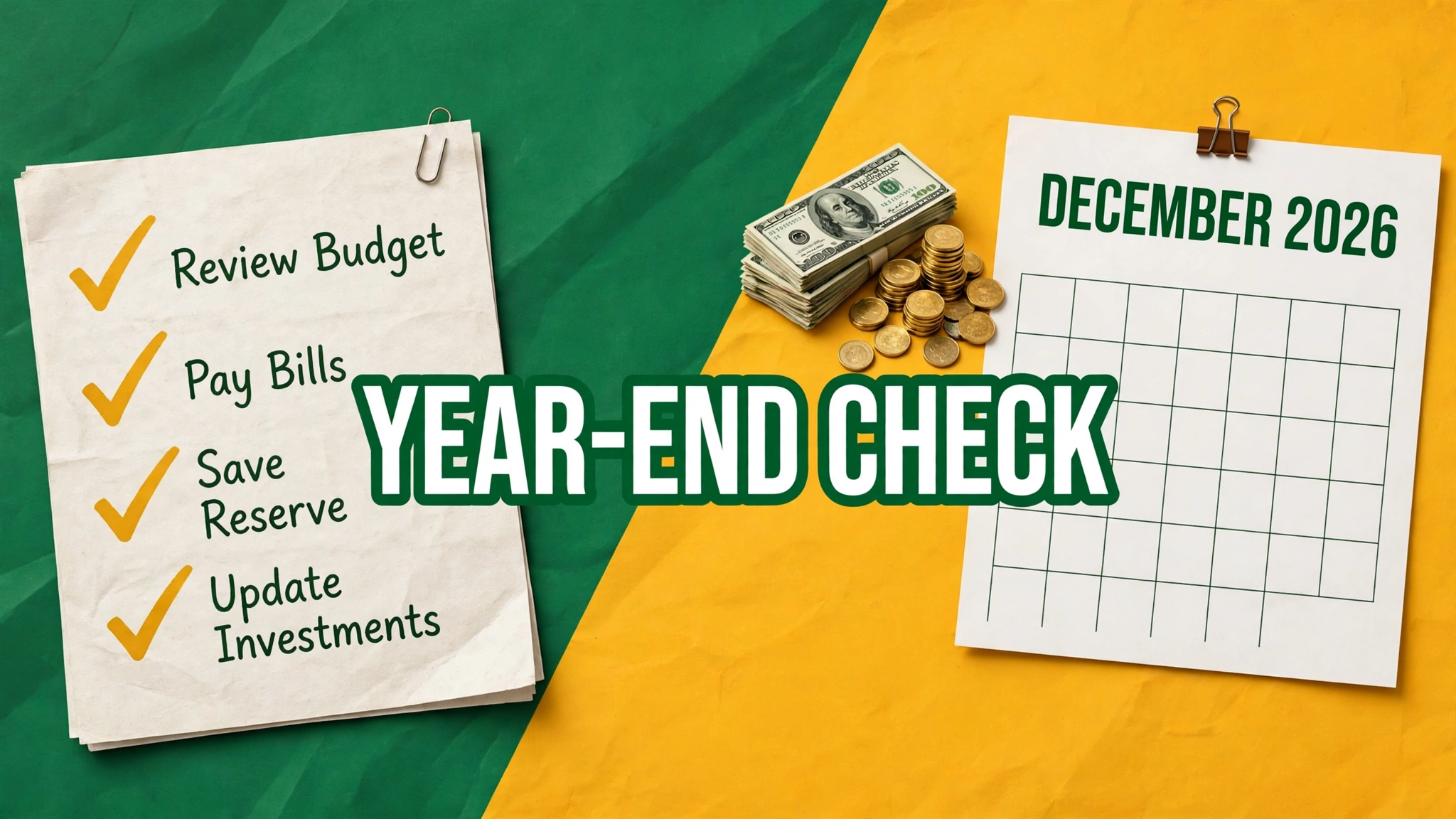
Here is the whole check as a list. Give yourself two or three hours, a drink, and no distractions.
- Add up every payment you received this year and write down the total.
- List your expenses by category and total them.
- Subtract expenses from income to see your rough profit.
- Check whether you have set aside enough for tax, and move money aside if not.
- Gather receipts and store them in one labelled folder for the year.
- Cancel one subscription you barely used.
- Write down your best earner, your biggest time-waster, and one change for next year.
That is it: no spreadsheets required, no software to buy, no jargon — just a clear picture of the year and a tidier start to the next one.
Frequently Asked Questions
How long does a year-end money check take?
Two to three hours for most side hustlers — a full afternoon if your records are scattered across a drawer and three apps. The first year is the slowest; with a simple monthly habit, next year takes about an hour.
Do I need accounting software to do this?
No. A notebook, a spreadsheet, or a single sheet of paper works for a small side hustle. Software helps once you have many clients or regular expenses, but the check itself is just adding, listing, and comparing — that is the valuable part.
What if I find I barely made a profit — or lost money?
That is useful information, not a failure. Many side hustles lose a little in their first year while setup costs are paid for. What matters is knowing the number: if a service costs more than it earns, raise its price, cut its costs, or stop offering it — decisions you cannot make without the numbers.
Should I do this check even if my side hustle is tiny?
Yes — especially then. Small income is easy to forget, and small expenses quietly add up. A tiny side hustle takes the least time to check, and the habit you build now is the one that saves you when it grows.
IncomeXP publishes practical, hype-free guides to earning more — no promises, just information you can use.