Start a Print-on-Demand Side Hustle With No Inventory
A print-on-demand side hustle is one of the few online business ideas you can start without buying stock, renting space, or shipping packages yourself. You create a design, put it on aproduct like a t-shirt or a mug, and when someone orders it, a printing partner makes it and ships it for you. You keep the difference between the sale price and the production cost.
That setup is why beginners like it — and why they misunderstand it. Print-on-demand is not passive income from day one. It is a small design business, and it pays when you treat it like one: pick a clear audience, publish enough products, and give people a reason to find them.
How Print-on-Demand Actually Works
Here is the simple version, step by step:
1. You upload a design to a print-on-demand platform such as Printful or Printify.
2. You choose the products it goes on: t-shirts, hoodies, mugs, tote bags, posters, and more.
3. You connect the platform to a shop, such as an Etsy shop or a Shopify store.
4. A customer orders a product. The printing partner prints that single item, packs it, and ships it.
5. You are charged the base production cost, and you keep the rest of the sale price as profit.
You never touch the product, and you never pay for unsold inventory, because nothing is printed until someone buys it. That low risk — not easy money — is the real advantage.
Step 1: Pick One Audience, Not One Product
Most beginners start with the product: “I will sell t-shirts.” A better starting point is the audience: who is the shirt for?
A design for “everyone” competes with millions of others. A design for a specific group — night-shift nurses, new gardeners, amateur bakers — has a much better chance of being found andbought, because the buyer feels it was made for them.
Pick an audience you actually understand. You will write better slogans and spot bad ideas faster when you know the group’s jokes, frustrations, and pride.
A good test: can you name ten design ideas for this audience without searching for inspiration? If yes, you have a workable niche. If you run dry at three, pick a different audience.
Step 2: Create Simple, Original Designs
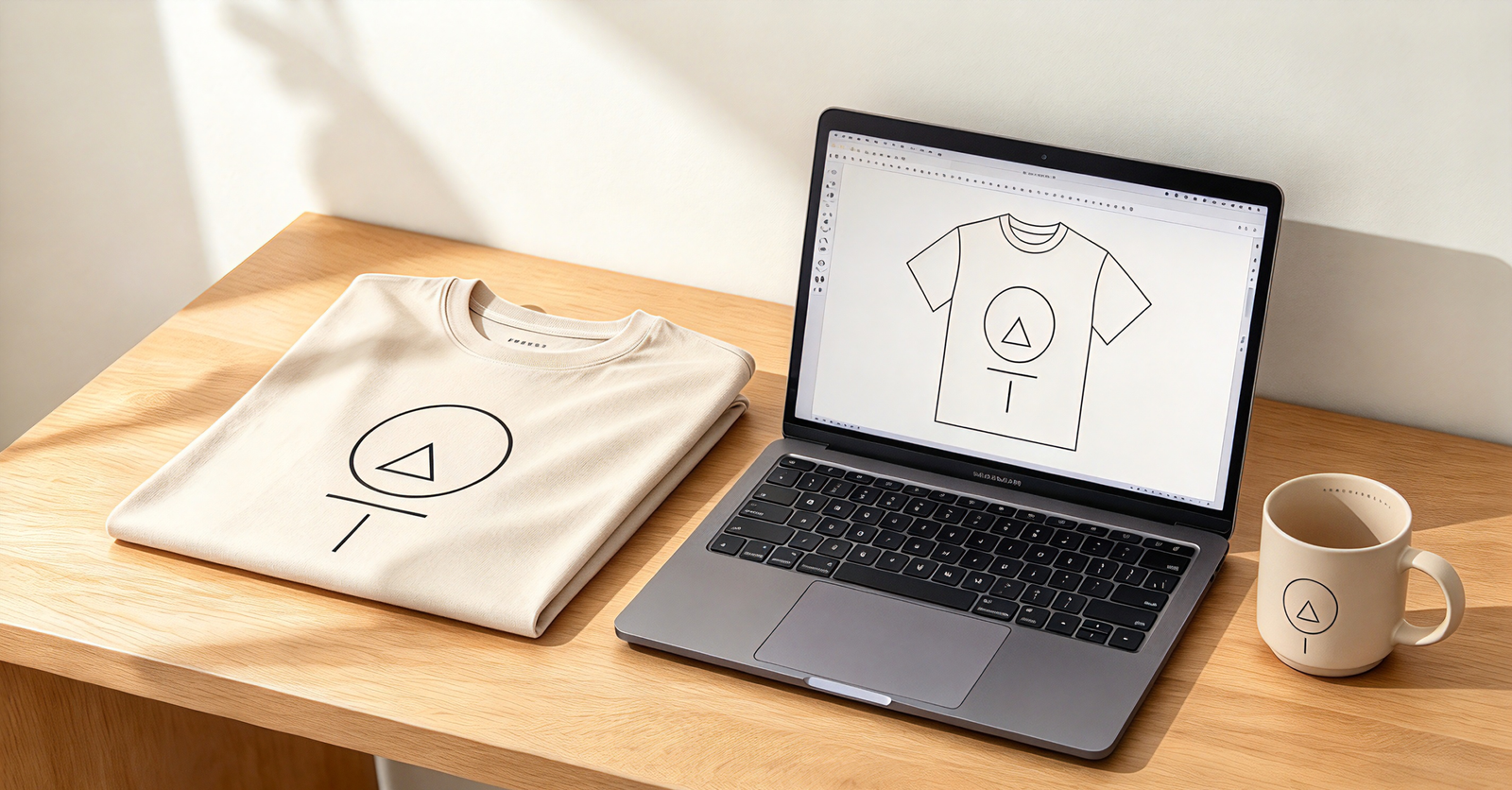
You do not need to be a professional designer. Many popular print-on-demand products use short text, a clean font, and one simple graphic. What matters is that the design is original and readable at a glance — most shoppers first see it as a small thumbnail on a phone.
Practical tips for your first designs:
1. Use a free design tool such as Canva to build your artwork at the size your printing partner recommends.
2. Keep text short — five words or fewer usually beats a paragraph.
3. Check that your design is fully your own work. Never copy another seller’s slogan or artwork, and never use trademarked names, sports teams, or famous characters.
4. Try one design on two or three products rather than making twenty unrelated designs.
Ten thoughtful designs for one audience will teach you more than a hundred rushed ones.
Step 3: Choose Where to Sell
The two most common beginner routes are:
Sell on a marketplace: Opening an Etsy shop gives you built-in shoppers looking for gifts and personalised items. The trade-off is competition and fees, and you still need good titles and descriptions so your products show up in search.
Sell on your own store: A Shopify store gives you full control over look, prices, and customer experience, but nobody arrives on their own — you must bring traffic through search, social media, or content.
Either route works. What does not work is listing three products and waiting. Whichever you choose, commit to it for a few months before judging the results.
Step 4: Price for a Real Profit
Pricing is where many beginners accidentally work for nothing. Before publishing, write down three numbers: the base production cost, the fees, and the profit you want to keep.
As a starting point, many beginners aim for roughly $5 to $10 profit per t-shirt, after costs and fees. That means a shirt that costs around $12 to produce might sell for $24 to $28, depending on the market place and its fees.
Do not race to the lowest price. A $15 shirt with $1 of profit needs fifteen sales to match one $30 shirt with $15 of profit. Price fairly, and let the design and the audience do the selling.
Step 5: Get Your First Views
A shop with no visitors makes no sales, so promotion is part of the job. You do not need paid adsto start:
1. Writing clear product titles that say what the item is and who it is for, so search can find it.
2. Posting your designs where your audience already spends time, without spamming.
3. Creating short, honest content around your niche, such as a video showing how a design looks on the real product.
Do not buy followers or pay for “guaranteed sales” services. They rarely deliver real buyers, andsome can get your shop in trouble.
What to Realistically Expect in Month One
Most beginners make little or nothing in their first month. A realistic first-month goal is not adollar amount — it is a finished shop: ten to twenty listed products, clear titles and descriptions, and regular sharing of your work.
By month two or three, with consistent listings and promotion, a small number of sales is reasonable, and a few dollars of profit per sale is normal. Reaching hundreds of dollars a month usually takes many listings and months of steady work. Anyone promising overnight print-on-demand riches is selling you a course, not a business plan.
Mistakes to Avoid
Copying other sellers’ designs: It can get your listings removed and your shop closed.
Targeting everyone: Broad designs disappear in search; specific designs get found.
Quitting after two weeks: Print-on-demand rewards patience in the early months.
Spending money you cannot afford: Start free, and only pay for extras once sales cover them.
Ignoring the numbers: Track which designs get views and sales, and make more of what works.
Your 30-Day Starter Plan
Week 1: Pick one audience and list ten design ideas for them.
Week 2: Create five designs and set up your shop with proper titles, descriptions, and prices.
Week 3: Publish five more designs and share your work in two places your audience alreadyvisits.
Week 4: Review your views and sales, improve your weakest listings, and plan your next tendesigns.
That is it. No inventory, no warehouse, no big upfront spend — just a small shop built one designat a time.
A print-on-demand side hustle will not make you rich quickly. But as a low-risk way to learn online selling, build design skills, and earn your first sales online, it is a genuinely good place to start —provided you give it the time it deserves.
IncomeXP publishes practical, hype-free guides to earning more — no promises, just information you can use.