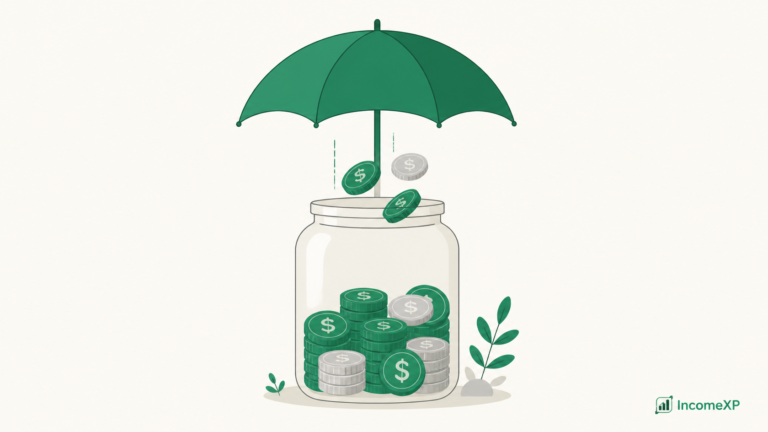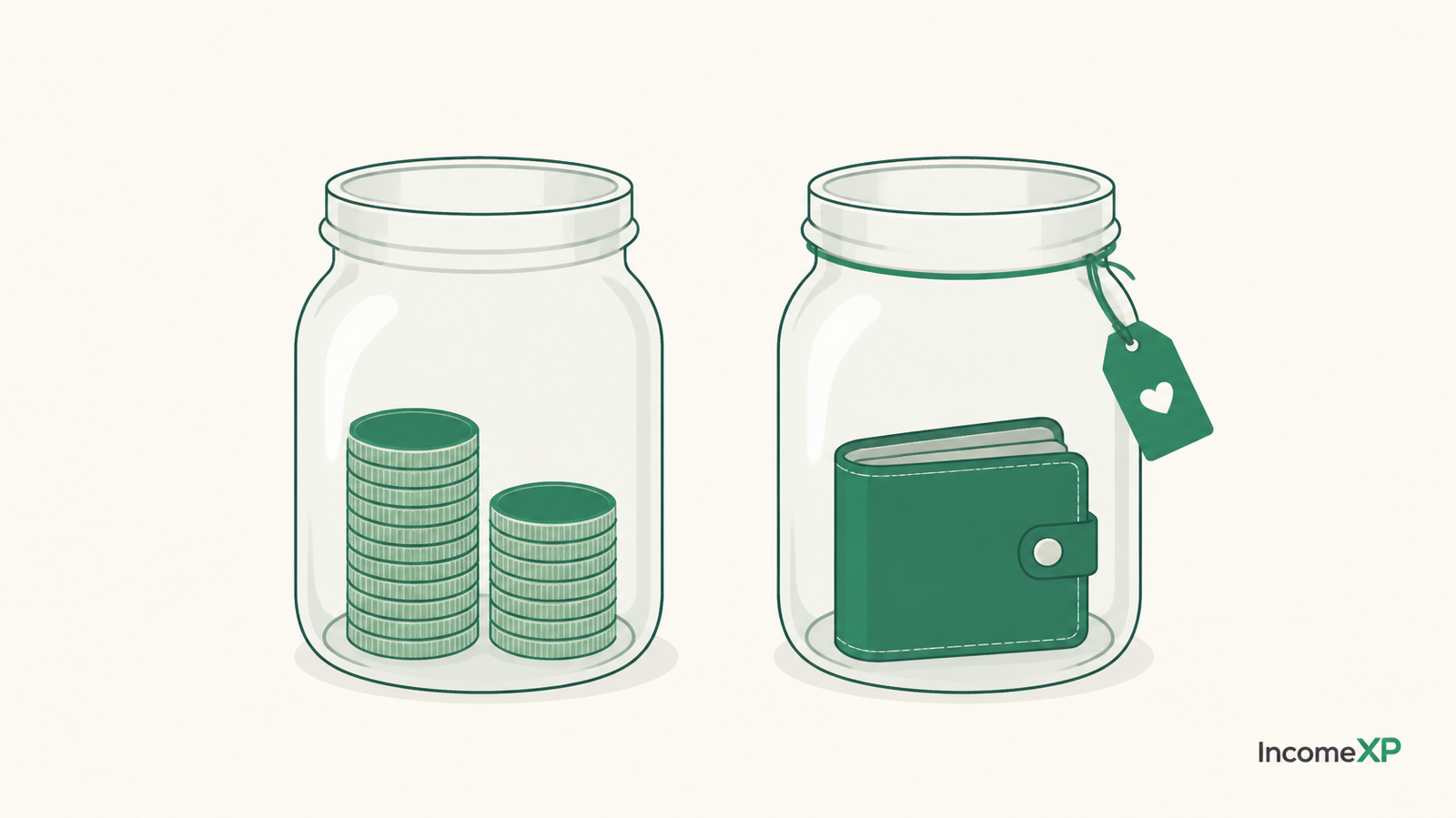
The moment side income lands in the same account as your grocery money, it starts to disappear. A $120 payout blends into the balance, you spend a little extra without noticing, and by month’s end you cannot say what you earned or where it went. The fix is simple: keep side income separate — give your extra earnings their own place to live, and taxes, budgeting, and saving all get easier.
Why separation matters
It is about being able to see what is happening. When side income has its own spot, four things get easier right away.
You can see whether the hustle is working. If freelance pay, rental payouts, and market takings all land in one place, the balance tells the truth: growing, flat, or barely worth the hours? Mixed with your salary and grocery spending, you cannot answer that at all.
Tax time stops being a treasure hunt. At tax time you need to know what you earned and what you spent to earn it. If every payment and expense ran through one separate account, the answer is one statement. Through your main account, it is hours of scrolling, trying to remember what each transaction was.
You stop spending it by accident. Money in your main account feels available; money in a separate spot feels like it has a job. That friction is the difference between “I earned $400 this month” and “I have no idea where it went.”
It protects your main budget. Side income is irregular — a big month, then a quiet one. Mixed with your regular money, spending drifts up in good months and squeezes in quiet ones. Kept apart, your everyday budget stays steady and the side income becomes a bonus you decide about on purpose.
Keep side income separate: the simple setup
You do not need a business or a special account type to start. For most beginners, this is enough:
Step 1: Open a second account. A free checking or savings account at your bank works fine. Some prefer a different bank, because transferring between banks adds friction that stops impulse spending. Either way, do not pay monthly fees for this.
Step 2: Route all side income into it. Every payment from a client, a platform, or a sale goes here and nowhere else. If a platform only pays to your main account, transfer it the same day. Side money lands in the side spot.
Step 3: Pay side expenses from it. Anything the hustle costs — supplies, platform fees, a domain name, a new tool — comes out of this account. That keeps costs visible and gathers your expenses in one place for year-end.
Step 4: Pay yourself on a schedule. Once a month, move a set amount — or a set share of the balance — into your main account as your “pay.” That is when side income becomes spending money, on purpose. The rest stays put as a cushion for slow months and tax.
That is the setup: one account, one rule about where money lands, one monthly payday.
How much to set aside for tax
This is the part people put off, and the part that causes the most stress later. The amount depends on where you live, so treat this as a starting habit, not a fixed rule — and note this is general information, not tax advice.
Set aside 20 to 30 percent of every side payment as soon as it arrives. Paid $200? Move $40 to $60 aside until tax time. If the real bill is less, the leftover is a bonus; if it is more, you are part of the way there instead of starting from zero.
Keep the tax money in its own spot. If it sits in the side-income account, the balance looks bigger than it is, and it is easy to spend money meant for tax. A second spot is worth the ten minutes it takes to open.
A five-minute weekly routine
Once a week, five minutes is enough:
- Check what came in. Note any new payments, and check each one matches what you agreed.
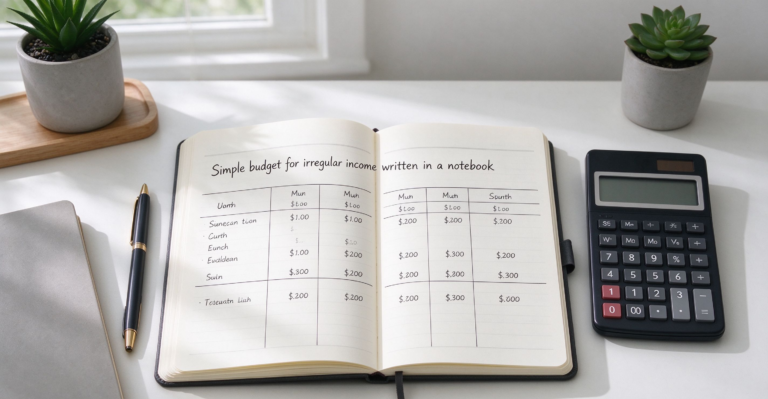
- Log expenses. Record anything you bought for the hustle — a phone note or simple spreadsheet is fine. Date, what, how much. That is all tax time needs.
- Move the tax set-aside. For any payment that arrived, move your chosen percentage into the tax spot right away.
- Check the balance. It keeps you honest about whether the hustle earns what your hours deserve.
Same day each week, and it becomes a habit.
Mistakes that undo the system
Mixing one purchase. One “I will just pay for this from my main account” starts the slide: a supply run here, a platform fee there, and your records are split across two accounts. Fix it the same day by transferring the amount and noting what it was.
Treating the side account as a second spending account. If the side account becomes a place you dip into for treats, it is just a second wallet. The monthly payday is the valve — money leaves on your schedule.
Waiting until you earn “real money.” People think separation is for later, when the income is bigger. But the habit is easiest to build when amounts are small. A $40 month with clean records teaches you the system; a $1,000 month with no records teaches you panic.
Forgetting the small cash. Cash is the easiest to lose track of. If a customer pays in cash, deposit it the same day — cash in a pocket gets spent and forgotten, and never appears in your records.
When to upgrade the setup
The one-account setup carries most people a long way. Upgrade when side income becomes a regular, significant part of your money, or you register a business name — a dedicated business account then makes bookkeeping cleaner. Until then, the simple setup is enough.
FAQ
Do I need a business bank account for a side hustle?
Usually not at the start. A free personal account used only for side income works for most beginners. A business account becomes useful when the income is regular and larger, or when you register a business. Check your bank’s rules first.
What if my bank charges fees for a second account?
Look for a free option first — many banks offer a free basic account, and online banks often have no monthly fees. If your bank charges, open the side-income account somewhere free.
Can I use a separate account if I am paid in cash?
Yes. Deposit the cash as soon as you can, and note who paid you and for what. The account only works as a record if the money passes through it.
What happens if I accidentally spend side income from the wrong account?
Nothing terrible. Transfer the same amount between accounts, note what happened, and carry on. One mistake does not break the system — a pattern does. Fix it the same day.
IncomeXP publishes practical, hype-free guides to earning more — no promises, just information you can use.