
Turn a Hobby Into Weekend Income
You can turn a hobby into weekend income without quitting your job, spending hundreds on equipment, or turning something you love into a chore. The trick is to start small: pick one thing people already pay for, sell it to a few real buyers on your weekends, and only grow it once the money shows up. Here is how to do that, step by step.
Pick a hobby people already pay for
Not every hobby earns money, and that is fine — but for weekend income you need one where strangers already open their wallets. The easiest test is to ask: are people already buying something like this?
Hobbies that usually sell well on weekends include:
- Making things: baked goods, candles, jewellery, woodwork, sewn or knitted items, greeting cards
- Taking photos: portraits, family sessions, event photos, pet photos, product shots for small shops
- Teaching what you know: guitar lessons, cooking classes, language practice, basic computer help
- Fixing and helping: bike repairs, garden tidy-ups, simple furniture fixes, phone screen protectors
- Performing or entertaining: music at small gatherings, face painting at children’s parties, storytelling
If your hobby is something like gaming or reading, it can still earn — through streaming, reviews, or tutoring — but it takes longer to find paying buyers. For a first weekend income, pick the hobby closest to something people already buy.
Start small: test before you invest
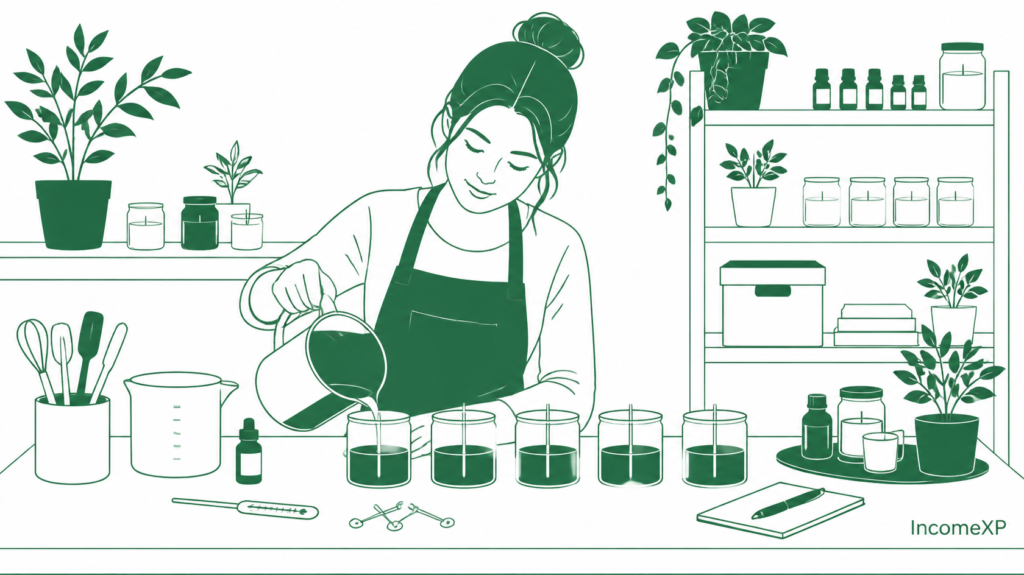
The biggest mistake beginners make is spending money before anyone has paid them. A new camera, a bulk order of supplies, or a fancy website can wait. Your first goal is simpler: get one stranger to pay you once.
Try this low-cost test:
- Make five of the thing, or offer three sessions. Enough to sell, not so many that you are stuck with stock.
- Tell people where your buyers already are. A local community group, a market stall for one Saturday, or friends of friends. You do not need ads yet.
- Ask for honest feedback and a photo. A happy buyer who lets you share a photo of their purchase is your first piece of marketing.
- Decide with real numbers. If three of your five items sell in a weekend, you have something. If nothing sells after two honest tries, the price, the product, or the audience needs changing — not your effort.
How to price your first weekend gig
Pricing a hobby feels awkward, because it never felt like work before. Use a simple formula to keep it fair:
Materials + your time + a small margin = your price.
- Materials: add up exactly what each item costs you to make, including packaging.
- Your time: pay yourself at least the local minimum wage per hour, even at the start. Your time is not free just because you enjoy the work.
- Margin: add 10 to 20 percent on top, so a slow weekend or a ruined batch does not wipe you out.
Then check the price against what similar things sell for nearby. If your handmade candles cost you $8 to make and sell for $15 at the local market, your price is in the right area. If similar candles sell for $12, either cut your costs or make something a little different so yours is worth the extra.
Where to find your first buyers

You do not need a big audience to make weekend money. You need a small group of people who already want what you make.
Start close to home:
- Local markets and fairs. One stall on a Saturday can bring your first ten buyers — and you learn fast what people actually pick up.
- Community groups online. Neighbourhood groups, hobby groups, and local buy-and-sell pages are full of people looking for exactly this kind of thing.
- Friends of friends. Ask your first happy buyers to tell one person. A personal recommendation beats any advert.
- Small shops. A local gift shop or cafe may stock a few of your items on consignment — you only get paid when they sell, but you get shelf space for free.
Later, if it works, a simple page on a marketplace or a social media account with photos of your work is enough. Do not build a full online shop until weekend sales are steady.
Keep it fun: avoid the burnout trap
A hobby that becomes a second job can stop being fun, and a burned-out seller quits. A few guardrails help:
- Set weekend hours and keep them. Two or three hours on a Saturday morning, for example — not every spare minute.
- Cap your orders. Decide in advance how many items or sessions you will take each weekend, and stop there.
- Keep one version just for you. If you sell cakes, still bake one batch a month just for your family, with no price attached.
- Take a weekend off regularly. One weekend a month with no orders keeps the hobby a hobby.
If you dread Saturday mornings, change the price, the volume, or the product. Weekend income should feel like a bonus, not a burden.
What a realistic first month looks like
Honest numbers matter more than hype. In your first month of selling a hobby on weekends, a realistic result is a handful of sales and maybe $50 to $200 of profit after materials — not a full income, and that is normal. The value of month one is learning: what sells, what price people accept, and how long each item really takes you.
Months two and three are where it grows, now that you have photos, a few happy buyers, and a sense of what to make more of. Some sellers reach a steady $200 to $500 a month on weekends after a few months; others stay small and are happy with the extra $100 — both are good outcomes. The goal is extra income that fits your life, not a second career you never asked for.
FAQ
Do I need a business licence to sell hobby items on weekends?
It depends on where you live and what you sell — food, for example, often has extra rules. Check your local council or small-business office for the basics before your first sale, especially for food or anything sold to children.
How much money do I need to start?
Most can start with $20 to $50 of materials for a first small batch. Avoid bulk supplies or new equipment until you have made your first sales.
What if nobody buys at first?
That is useful information, not failure. Ask the people who looked but did not buy what stopped them — price, style, or timing. Change one thing and test again before deciding the idea does not work.
Should I quit my job if my hobby starts earning well?
Not yet. Wait until the hobby income is steady for several months and covers a real share of your costs before you even think about cutting your hours. Weekend income is at its best when it is extra money, not survival money.
IncomeXP publishes practical, hype-free guides to earning more — no promises, just information you can use.